# Email simulations
An email simulation sends your employees a fake email that looks like it comes from a company they use, such as Microsoft or DocuSign, or from a colleague. It tests whether people stop and check before they click a link, sign in, or open a file.
{% hint style="info" %}
Noon delivers the email through your connected workspace. Connect Google Workspace or Microsoft 365 before you launch. See [Connect your workspace](https://help.noon.security/getting-started/connect-your-workspace).
{% endhint %}
## How it works
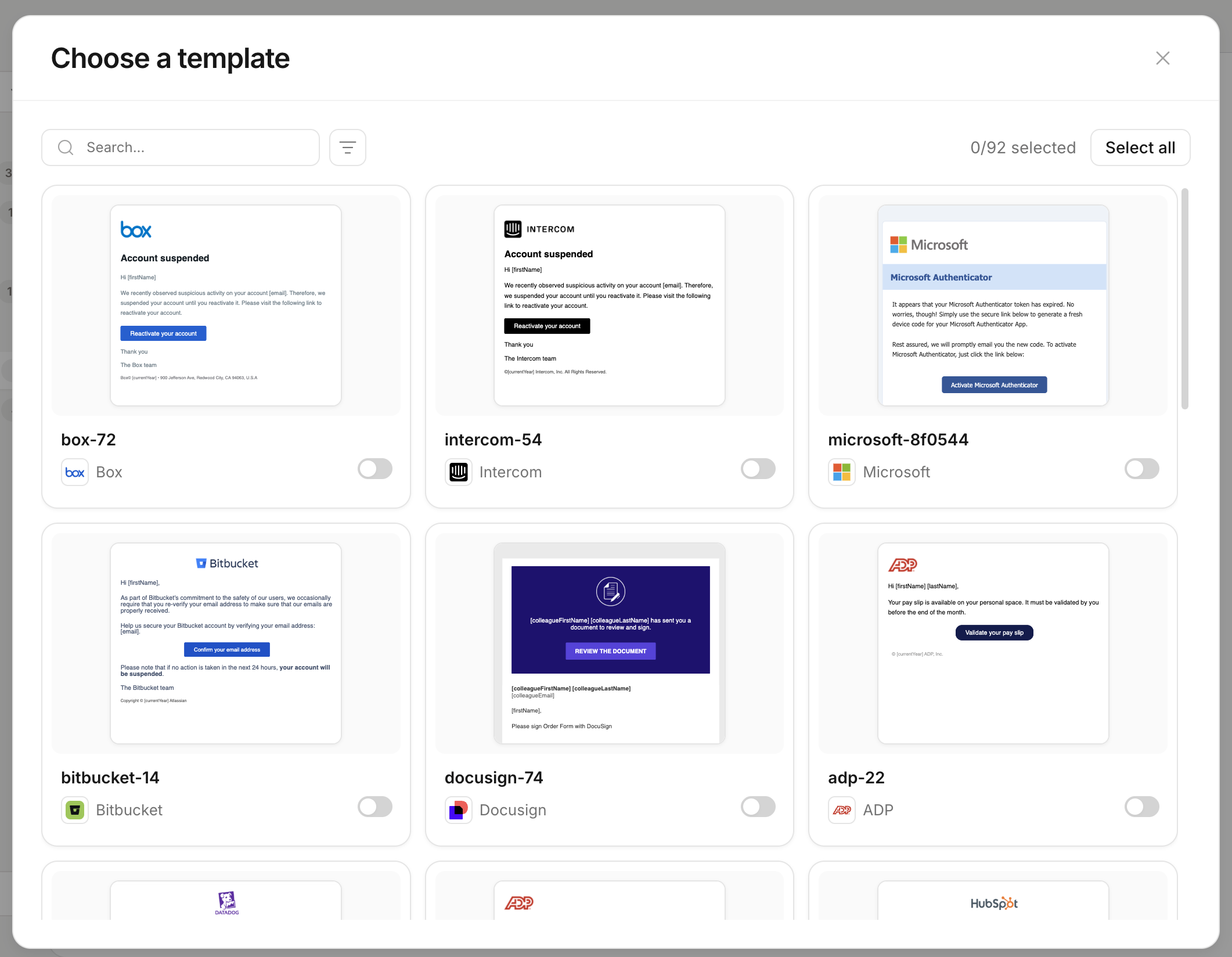
Each email template is a short fake message, such as "Account suspended" or "Validate your pay slip". It greets the person by first name and asks them to act.
You choose what the email asks for (**Phishing method**) and how many red flags it has (**Difficulty**). Noon sends a matching template to each person. Anyone who falls for it gets a short lesson. See [What employees see](https://help.noon.security/train/phishing-simulations/what-employees-see).
## Test whether people sign in on a fake page
Emails that ask for a password are a common way into a company. Run an email campaign to see who signs in, and who reports the email instead.
{% stepper %}
{% step %}
### Open a new campaign
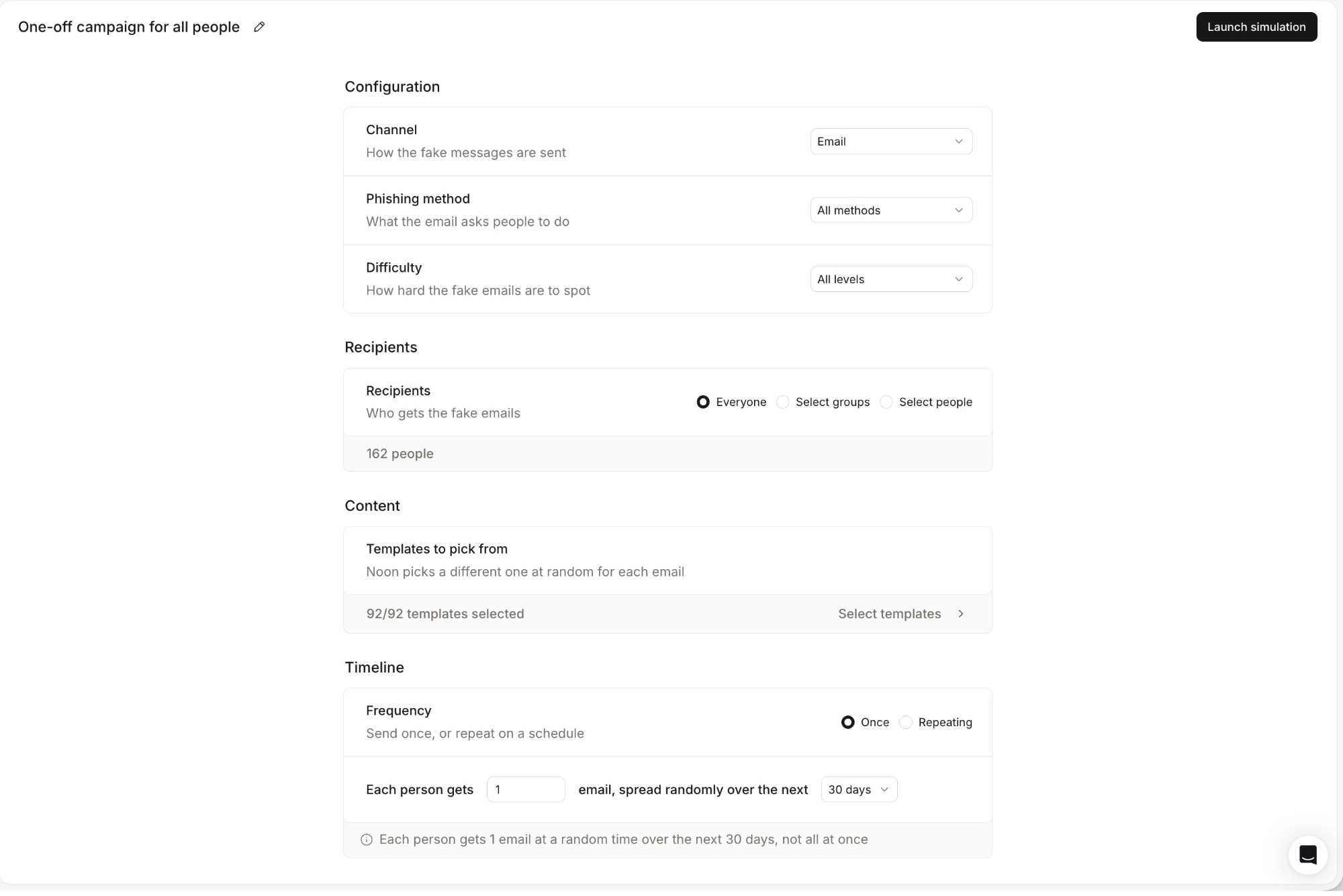
Go to **Phishing** and click **Add campaign**.
{% endstep %}
{% step %}
### Choose the email channel
Under **Channel**, choose **Email**.
{% endstep %}
{% step %}
### Choose what the email asks for
Under **Phishing method**, choose the methods to include, or leave **All methods**. Your choice changes which templates are available.
* **Fake login pages**: sign in on a fake page.
* **Malicious attachments**: open a file.
* **App access requests**: give an app access.
* **Impersonation**: pose as a colleague.
* **Fake invoices**: pay a bill.
* **QR code phishing**: scan a QR code.
Then choose a **Difficulty**: **Easy**, **Medium**, **Hard**, or **All levels** for a mix.
{% endstep %}
{% step %}
### Choose who receives it
Under **Recipients**, choose **Everyone**, **Select groups**, or **Select people**.
{% endstep %}
{% step %}
### Pick email templates
Under **Templates to pick from**, click **Select templates**. Turn on the emails you want to send, or click **Select all**. Click **Save**. To send an email you generated yourself, see [Create a custom email template](https://help.noon.security/train/phishing-simulations/email-simulations/custom-email-templates).
{% endstep %}
{% step %}
### Choose the schedule
Under **Timeline**, choose **Once** or **Repeating**. Then set how many emails each person gets and over how long. Noon sends them at random times in that period, not all at once.
{% endstep %}
{% step %}
### Launch the simulation
{% hint style="warning" %}
After launch you can only rename the campaign. Channel, methods, recipients, templates, and schedule stay as they were.
{% endhint %}
Click **Launch simulation**.
{% endstep %}
{% endstepper %}
## Read the emails before you send them
Go to **Phishing** → **Library** and open a template to see the email, the fake page its link opens, and the lesson. Remove any template that doesn't fit your workspace, for example a payroll email from a vendor your company doesn't use. Click **Send to me** to get a copy in your own inbox. See [Phishing library](https://help.noon.security/train/phishing-simulations/phishing-library).
Emails contain placeholders that Noon fills in for each person, such as **[firstName]**, the person's first name.
To control which companies and names the emails use, see [Campaign settings](https://help.noon.security/train/phishing-simulations/campaign-settings). To see who clicked, signed in, or reported, see [Campaign results](https://help.noon.security/train/phishing-simulations/campaign-results).